Platform teams are product teams - strategy
•
4 May 2022
•
3 mins

In many companies there seems to be a different approach in how teams serve their end-users. Often you see that feature teams are more end-user focussed, as a result of the agile way of working, but the operational or supporting teams have a hard time connecting to this way of thinking because they ‘don’t deliver any value to their customers’.
Maximising the delivery of business value, however, is only possible when the supporting platforms and sub-system teams also strive to reach the same goals as the customer-facing feature teams. They just have different end-users and stakeholders but their purpose must be to serve the company’s strategy and business goals.
If the realisation of business goals have a need for fast delivery, the objective for platform teams is also to make sure teams can have fast delivery. If the business goals demand a different type of architecture, platform teams need to make sure that feature teams can easily change what is needed.
Now you often see the following pattern:
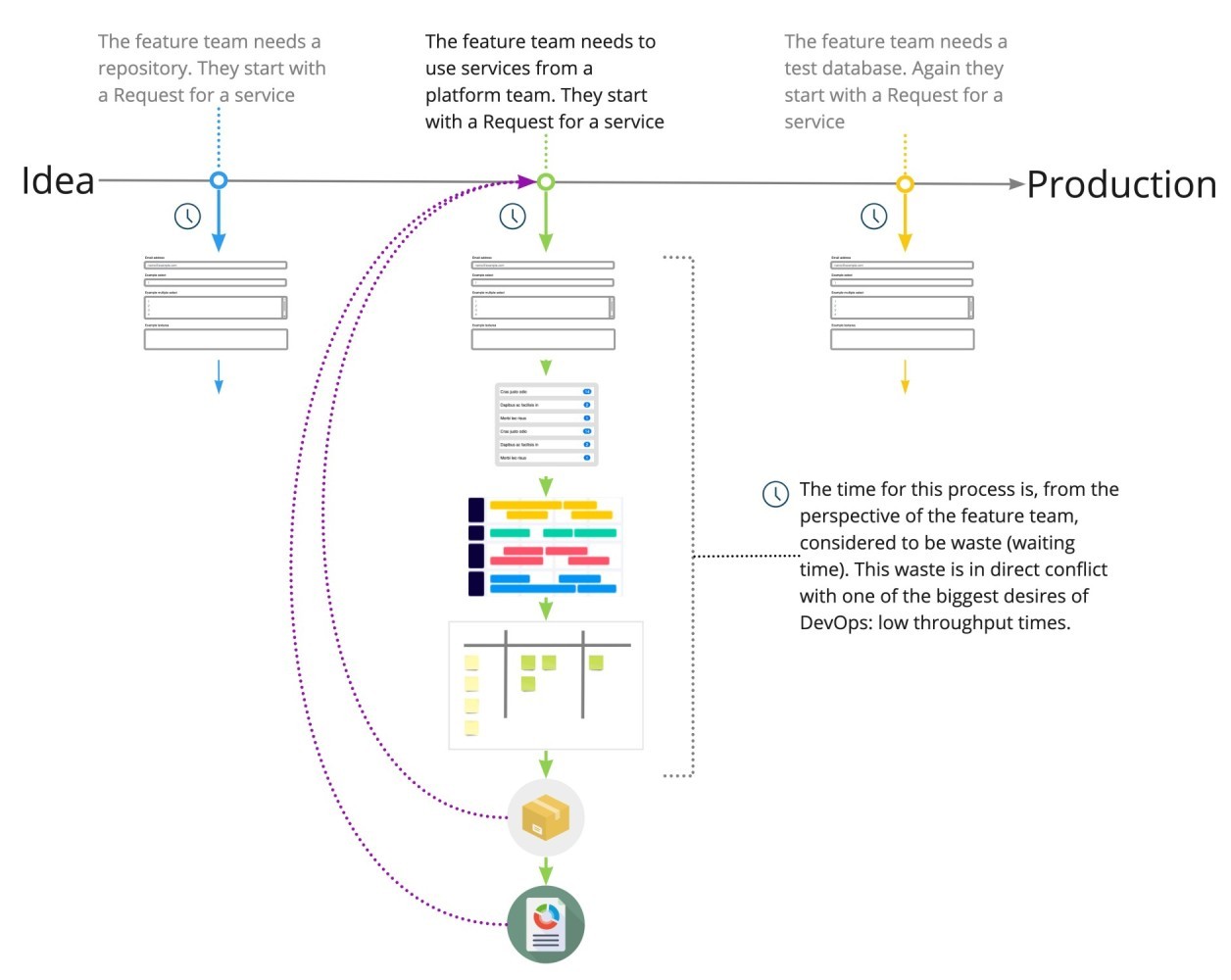
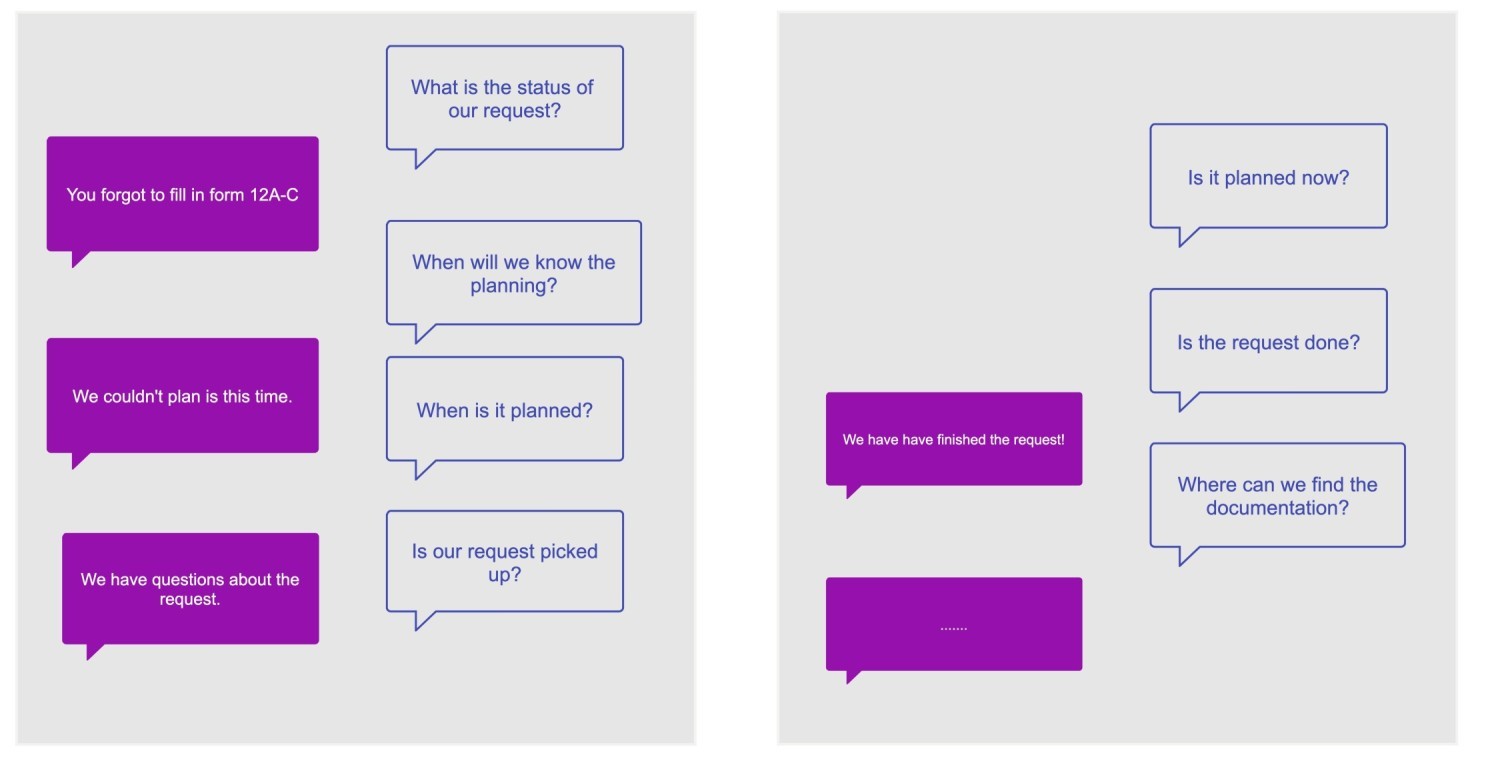
This often results in quite some communication and one of the biggest wastes: waiting time. You will see the following symptoms:
- Teams are depending on the planning of other teams (that are often already swamped with requests).
- There is quite some waiting time which from the value stream perspective is considered waste.
- Much communication is needed.
- Feature teams experience frustration because they have to request, wait and can not proceed as fast as they need/want.
- Platform teams become frustrated as they are serving a never-ending flow of requests instead of focussing on productising and improving.
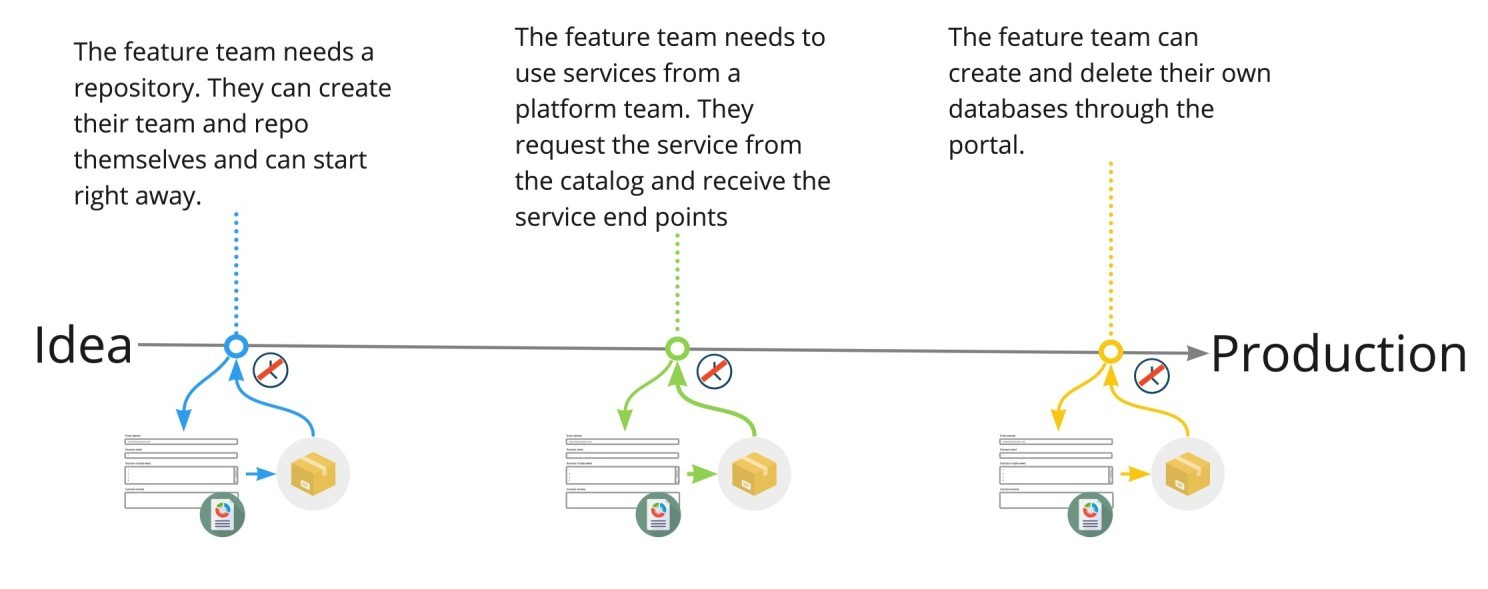
In this example, the platform and sub-system teams have a catalogue of products and services that other teams can use. The request and the fulfilment of it are automated. Requests that are not in the catalogue yet will be done manually while also added to the roadmap. When worthwhile it can be added to the catalogue. This way the catalogue will grow based on user demand.
- Common requests from teams are automatically granted, configured and communicated back to the requester.
- The provided product or service is being set up with meaningful default settings.
- There is no manual communication needed between the requester and the creator.
- There is less or no waiting time between request and fulfilment.
- The platform and subsystem teams can spend more time improving their product.
- The platform and subsystem teams have a clear purpose that directly aligns with delivering business value.
First steps in becoming a platform product team
In order to transform from an operational team/department to a platform product team, teams have to regard it as their primary objective to support feature teams. Their products must support the company’s strategy, have a product vision, roadmap, stakeholder insights, end-user community and clear agreements about the service levels.
Purpose and vision
The perception of business value is just different. While not serving end-users directly an internal platform team has a really big impact on the services that are used by end-users. The users of the platform are just personas and are often people who work at the same company. Serving their needs is crucial to be able to fulfil the end-user desires. The vision should be formulated differently. Bolder and daring.
Example vision statements:
- Our product makes it possible for our feature teams to deliver features faster to OUR customers.
- We supply our organisation with a set of working tools for automation so that feature teams can spend as much time as possible on what they should: provide the best possible end products for our customers.
- We serve our developers with a secure self-service product where they have maximal freedom to configure the services they provide.
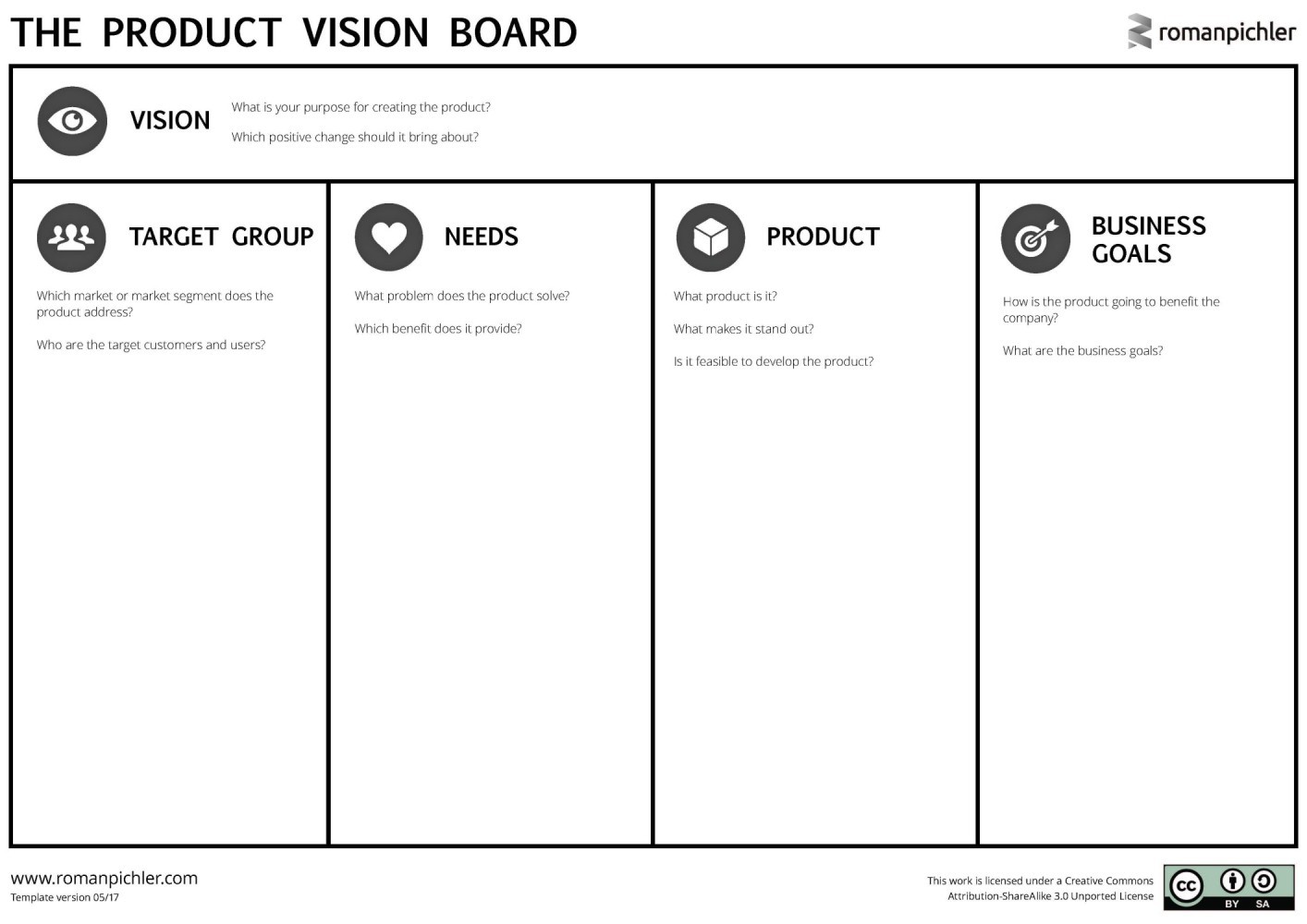
A great tool to explore and define the product vision, target groups, needs and benefits is a product vision canvas:
The delivery of the highest business value in the context of DevOps is only possible if everyone sees his/her part in the flow of getting ideas to production. Whether internal or end user facing, all of us need to provide ways for others to consume our services as simple as possible.
Like it? Share it!