first step
•
18 May 2026
•
3 mins
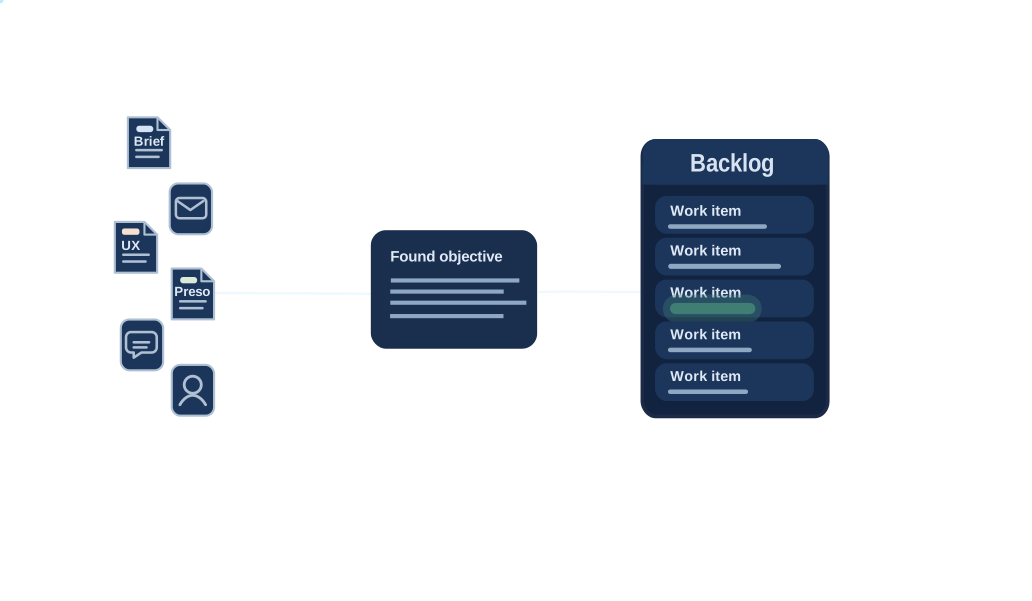
With every change, the first step is often the hardest. The same goes for value driven product development. Most of us get pulled into day to day operations constantly. Finding time to actually think about the product can be difficult. So let’s talk about what could be the first step. You probably will not find it in your backlog or sprint goals. You will need to step outside your comfort zone sometimes. See it as an exercise. The more often you do it, the easier it becomes.
Baby steps
Start by finding just one goal. Is there anything written down somewhere that states something needs to be achieved? It can be end user, department, or company focused. It does not matter for now. As someone who is often hired externally, I usually start by searching document storage, wiki pages, Teams chats, internal portals and of course by asking colleagues. Surprisingly often, the useful information is hidden in slide decks. Can you find one actual goal? A strategic document? A statement of intent? And if you do, does it make sense? Do not worry if it is imperfect. This is just the first step. Making goals better and sharper comes later. Once you find that one goal or statement of intent, ask yourself if there is any feature, epic, or user story connected to it. Maybe somewhere there is a statement like:
- “Reduce HR support tickets by 40% by enabling self service access to leave requests, payroll information and onboarding resources.”
- “Improve executive decision making speed by delivering real time company performance metrics and automated reporting across departments.”
- “Increase paid team subscriptions by 25% within one year through improved collaboration and automation features.”
helpful vs unhelpful goals
Not every (business) goal you manage to find is automatically a good one. Or even up-to-date. Some goals sound important but are actually too vague to be useful:
- “Become more innovative.”
- “Improve customer experience.”
- “Be AI native.”
These are intentions, not goals. They do not tell you what success looks like and do not help teams make decisions. They are almost impossible to measure.
If these are the only kinds of goals you can find, then that is already valuable information. This is often where people get stuck because writing strategic goals is usually not their responsibility. But if there are no clear goals, it becomes very difficult to validate whether the product is actually successful. Try turning vague intentions into something measurable. For example:
- “Reduce customer onboarding time from 5 days to 1 day before Q4.”
Now features can actually contribute to a goal in a measurable way.
Validate
Does your product contribute to that goal in any way? And if not, what is the smallest possible adjustment or addition that would contribute to it? Can you measure that contribution?
Ownership of measurement
This is often the point where things slow down. A lot of Product Owners get stuck when the conversation turns to measuring outcomes. Not because they are incapable, but because they feel they need to figure out how it should be measured. That is often the pitfall since measuring outcomes is a product feature. Determining why something should be measured is product ownership. Figuring out how to measure it is a team effort.
Persevere
It will take time. And along the way, you will probably discover that goals are vague, outdated or sometimes completely missing. You will often be the person asking for clarity. That is part of product ownership. Making sure you are actually delivering value is supposed to take time.
Like it? Share it!